If you’ve just been diagnosed with sleep apnea, chances are your doctor handed you a prescription, said “get a CPAP,” and sent you on your way — leaving you to figure out the rest on your own. And that’s where most people get stuck. Walk into any medical supply store or browse online, and you’re suddenly staring at a wall of machines, masks, tubing, filters, and accessories with no idea where to start.
I get it. CPAP equipment isn’t exactly bedtime reading, but once you understand the basics, choosing the right setup becomes a lot less overwhelming. So let’s break it down in plain language.
What Exactly Is CPAP Equipment?
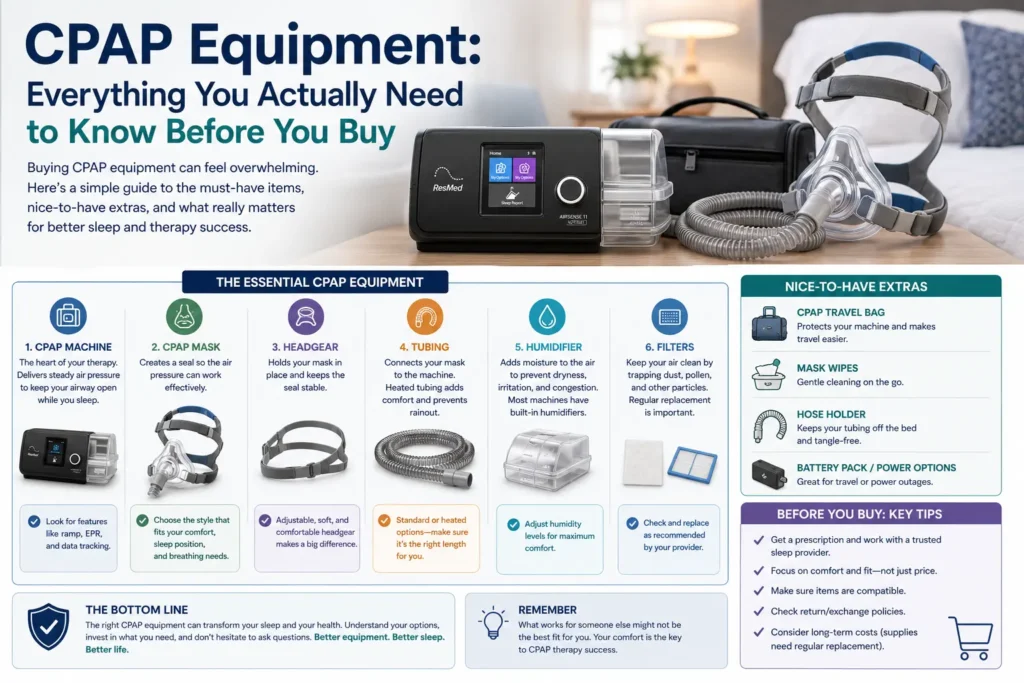
CPAP stands for Continuous Positive Airway Pressure. In simple terms, it’s a therapy that keeps your airway open while you sleep by delivering a steady stream of pressurized air. The “equipment” side of things includes everything that makes this therapy work — the machine itself, the mask you wear, the tubing that connects them, and a handful of smaller parts that keep everything running smoothly.
It sounds like a lot, but once it’s set up, it becomes part of your nightly routine — not much different from brushing your teeth.
The CPAP Machine: The Heart of the Setup
The CPAP machine for sleep apnea is the core device. It pulls in room air, filters it, pressurizes it, and sends it through the tubing into your mask. Most modern machines are surprisingly quiet — nothing like the clunky, loud devices from a decade ago.
There are a few types worth knowing about:
- Standard CPAP – delivers one fixed pressure throughout the night.
- APAP (Auto-adjusting CPAP) – automatically adjusts pressure based on your breathing patterns.
- BiPAP – delivers two different pressure levels, often used for more complex breathing conditions.
For most people newly diagnosed with obstructive sleep apnea, a standard or auto-adjusting machine does the job just fine. Your sleep specialist will usually guide this decision based on your sleep study results.
Masks: Where Comfort Really Matters
If there’s one thing that makes or breaks someone’s CPAP experience, it’s the mask. You can have the best machine in the world, but if the mask doesn’t fit right, you’re not going to wear it — and therapy only works if you actually use it.
When it comes to CPAP mask types, there are three main categories:
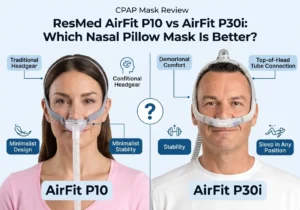
- Nasal Pillow Masks – small, minimal contact, great for people who move around a lot at night or feel claustrophobic with bulkier masks.
- Nasal Masks – cover the nose, offering a balance between comfort and stability, good for people who need higher pressure settings.
- Full-Face Masks – cover both the nose and mouth, ideal for mouth breathers or people with nasal congestion issues.
There’s no universally “best” mask — it really comes down to how you sleep, your facial structure, and personal comfort. A lot of people go through a bit of trial and error before landing on the one that actually works for them, and that’s completely normal.
Accessories That Make a Real Difference
Once you’ve got your machine and mask sorted, there’s a whole category of smaller items that quietly make CPAP therapy easier and more comfortable. Some of the best CPAP accessories worth considering include:
- Heated humidifiers – reduce dryness in your throat and nose, especially helpful in colder climates.
- CPAP pillows – specially designed to reduce mask pressure points, letting you sleep in different positions comfortably.
- Chin straps – useful for people who tend to breathe through their mouth and lose air pressure overnight.
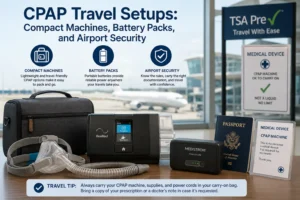
- Travel cases and battery packs – handy for anyone who travels often or camps and doesn’t want to skip therapy.
None of these are strictly mandatory, but they can be the difference between tolerating your CPAP and actually looking forward to using it.
Don’t Skip the Maintenance Side
Here’s the part most people overlook — cleaning. CPAP equipment sits close to your face and processes the air you breathe all night, every night. Without regular maintenance, you’re basically breathing in whatever builds up inside the tubing and mask.
Some essential CPAP cleaning supplies to keep on hand:
- Mild, unscented soap (avoid harsh chemicals near your airway)
- CPAP wipes for quick daily mask cleaning
- Filter replacements (check your machine’s manual for how often)
- UV or ozone-based sanitizing devices, if you want a more automated cleaning routine
A simple weekly cleaning schedule goes a long way in preventing mold, bacteria buildup, and unpleasant odors — plus it extends the life of your equipment.
Final Thoughts
CPAP equipment can feel like a lot to take in when you’re just starting out, but it really comes down to three things: the right machine, a mask that actually fits your face and lifestyle, and a bit of consistent maintenance. Get those right, and CPAP therapy stops feeling like a chore and starts feeling like just another part of your routine — one that leaves you waking up actually rested.
If you’re still figuring out your setup, don’t be afraid to try a few different mask styles before settling in. Comfort is personal, and the “right” equipment is really whatever helps you sleep through the night without thinking about it.