Continuous positive airway pressure (CPAP) is the most commonly prescribed treatment for obstructive sleep apnea. Here's what it does, why it works, and how to get past the rough first few weeks.
CPAP stands for Continuous Positive Airway Pressure. In simple terms, it is a machine that provides a continuous flow of air pressure while you sleep.
People with Obstructive Sleep Apnea (OSA) often experience blockage in their airway during sleep. This can lead to repeated breathing pauses, low oxygen levels, loud snoring, restless sleep, and morning fatigue.
A CPAP machine gently pushes air into the airway by keeping it open throughout the night. CPAP therapy is not a permanent cure for sleep apnea. It works while you use it, which is why regular use is important.
A CPAP machine takes room air, filters it, pressurises it, and sends it through a tube into a mask worn over your nose, mouth, or both.
The continuous air pressure prevents soft tissues in your throat from collapsing and keeps your airway open during sleep.
Your doctor or sleep specialist usually decides the pressure setting after a sleep study. The required pressure depends on the severity of sleep apnea and your individual needs.
A CPAP machine is mainly used to treat obstructive sleep apnea. It helps reduce breathing interruptions, improve oxygen levels, and support better sleep quality.
Common symptoms of sleep apnea include:
A CPAP setup usually includes:
CPAP provides one fixed level of air pressure throughout the night and is commonly prescribed for obstructive sleep apnea.
BiPAP provides two pressure levels: higher pressure during inhalation and lower pressure during exhalation.
APAP automatically adjusts pressure during sleep according to your breathing patterns.
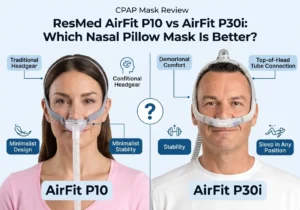
Choosing the right CPAP mask is one of the most important factors for comfortable and effective therapy.
The biggest benefits of CPAP therapy come from regular and consistent use.
Using a CPAP machine can feel uncomfortable at first. Sleeping with a mask and air pressure may take time to adjust.
Snoring is caused by vibration of the tissues in the upper airway as air passes through.
Sleep apnea, on the other hand, involves recurring pauses in breathing during sleep that reduce oxygen levels and interrupt normal sleep.
People with sleep apnea snore, but not everyone who snores has sleep apnea.
Sleep apnea is one of the most common sleep disorders globally.
Yes, sleep apnea if left untreated can increase the risk of serious health conditions, which include high blood pressure, heart disease, stroke, type 2 diabetes, and depression.
However, the good news is that early diagnosis and appropriate sleep apnea treatment can reduce these risks and improve sleep quality and overall health.
CPAP therapy may feel strange in the beginning, but for many people with obstructive sleep apnea it becomes a life-changing treatment.
The machine is not just a device beside your bed. It helps you breathe better, sleep better, recover, and function better the next morning.
CPAP works best when it matches your lifestyle, comfort, breathing patterns, and guidance from your healthcare provider.