CPAP therapy is rarely a one-time purchase. Between the machine, mask, replacement parts, and ongoing supplies, understanding what insurance actually covers — and what it doesn’t — can save you from surprise bills months into treatment.
What insurance typically covers
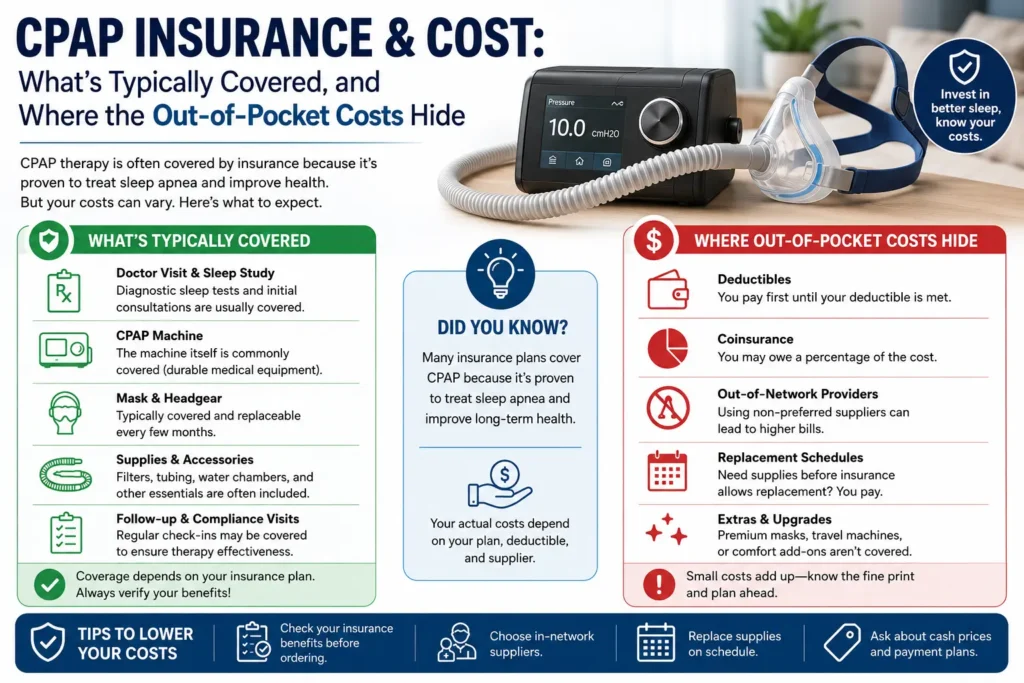
Most health insurance plans, including Medicare in the US, cover CPAP therapy as durable medical equipment (DME) once you have a documented sleep apnea diagnosis from a sleep study. Coverage generally includes:
- The CPAP or APAP machine itself
- A mask and headgear
- Tubing
- A humidifier, in many cases
Coverage is usually structured as either a rental-to-own arrangement or a direct purchase, depending on your plan. Rental arrangements often require proof of compliance — typically defined as using the machine a minimum number of hours per night for a set percentage of nights — before the equipment converts to your ownership.
Where compliance requirements catch people off guard
This is one of the most common — and least understood — parts of CPAP coverage. Many insurers, particularly Medicare, require documented usage data during an initial trial period (often the first 90 days) to prove the therapy is being used consistently. If usage falls short, the insurer can deny continued coverage of the equipment, even if the diagnosis and prescription are valid.
This is part of why nearly every modern CPAP machine tracks and transmits usage data automatically — it’s not just for your own tracking, it’s often required documentation for your insurer. If you’re struggling to hit your compliance hours in the first few weeks due to mask discomfort or difficulty adjusting, it’s worth contacting your DME provider or clinician early rather than waiting out the trial period.
Supplies wear out — and replacements aren’t always automatic
This is where a lot of the “hidden” cost lives. CPAP supplies have a limited lifespan, and most insurers set specific replacement schedules — for example, a new mask cushion every month, headgear every six months, and tubing every three months. If you don’t request replacements on that schedule, insurers generally won’t cover a replacement early, even if your current supplies are visibly worn out.
On the flip side, some people don’t realize they’re eligible for these regular replacements and simply keep using the same worn-out mask cushion for a year, which often makes the mask seal worse and therapy less effective — a cycle that sometimes gets misread as “CPAP just doesn’t work for me.”
Checking your plan’s specific replacement schedule with your DME supplier is worth doing once, early on, so you’re not paying out of pocket for parts that are technically already covered.
Costs that often aren’t covered
A few recurring costs tend to fall outside standard insurance coverage:
- Travel-specific machines — insurers typically cover one primary machine, not a second travel-sized unit, even if it’s for the same prescription.
- Battery packs and backup power accessories — generally classified as convenience items rather than medical necessities.
- Filter replacements beyond the standard schedule, or premium filter upgrades.
- Mask upgrades to a different style than originally prescribed, unless a clinician documents a medical reason for the switch.
What to do before you buy anything
Before purchasing equipment or supplies out of pocket, it’s worth checking:
- Your specific plan’s DME benefit and whether it’s rental or purchase-based
- The compliance requirements and trial period length, if you’re a new user
- Your supply replacement schedule, so you’re not missing covered replacements
- Whether your DME provider is in-network, since out-of-network suppliers often mean higher out-of-pocket costs even for otherwise covered items
The bottom line
CPAP coverage is broader than most people expect at diagnosis, but it comes with rules — compliance windows, replacement schedules, and in-network requirements — that determine how much you actually pay. The costs that catch people off guard are rarely the machine itself; they’re the supplies, accessories, and gaps in schedule that insurance doesn’t automatically flag for you.
This article is for educational purposes only and isn’t a substitute for guidance from your insurance provider or DME supplier about your specific plan.